
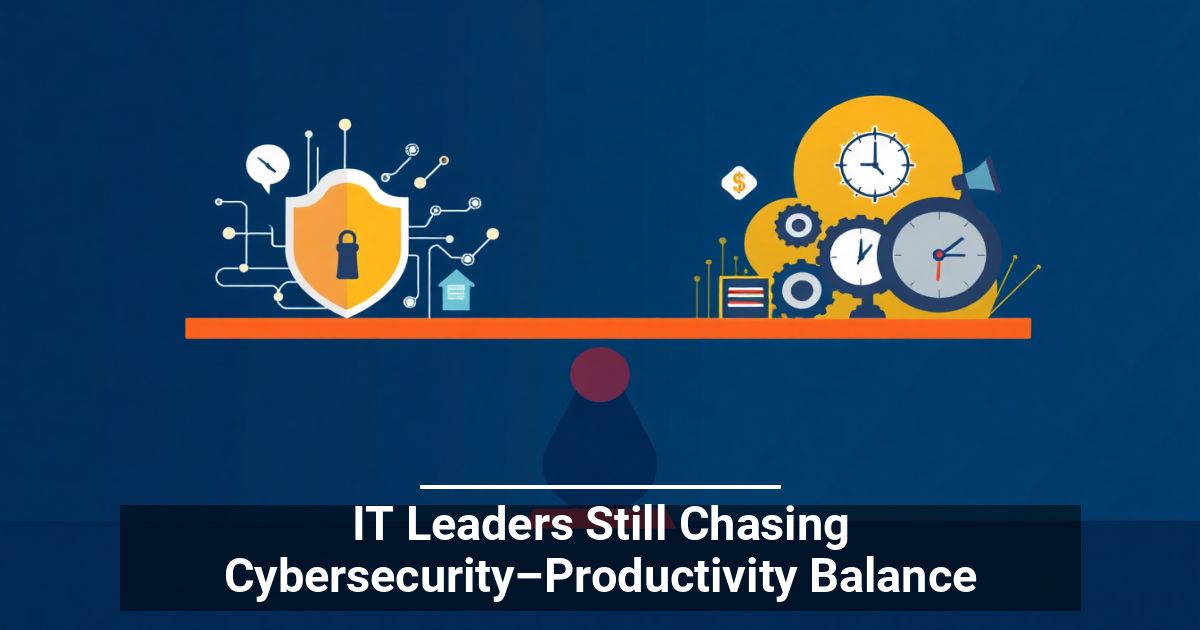
 Getting the cybersecurity–productivity balance right is tougher than most people think.
JumpCloud and Google Workspace recently found something surprising: Just 6% of IT leaders think their office software setup actually works as it should. That leaves a whopping 94% facing challenges from spiraling costs and security concerns to growing complexity.
This isn't just an IT problem. It's a business one. Fragmented tools slow down teams, open doors to risks, and eat into profits.
Companies are struggling with rising costs, tricky security issues, and complex tech stacks. Many are on the lookout for ways to keep data safe without frustrating their teams. For most, this presents a prime opportunity to rethink their setup and gain an edge with a more unified, secure platform.
What's Really Frustrating IT Teams These Days?
If you feel like you’re dealing with too many apps and logins, you’re not alone. IT leaders report managing an average of nine tools, leading to constant firefighting. The biggest headaches? Managing too many admin tasks, fiddly security settings, and pricing that doesn’t make sense.
Business owners should recognize that balancing IT security and workplace productivity is a priority. A system that slows down users or complicates collaboration can affect morale, retention, and overall business performance. When systems don't talk to each other seamlessly, employees spend too much time switching between them or waiting for IT help.
At the same time, it’s important to consider the impact of restrictive security on employee workflow. Frustrated employees often seek out less secure workarounds. Gaps in integration can create security vulnerabilities that cybercriminals love to exploit.
The result? Many systems are fragmented and inefficient.
The Push for Unified, Secure Platforms
The research shows a clear trend: 87% of IT leaders are willing to swap out their current productivity suites for a more unified or secure platform. They want a setup that supports the strategic alignment of IT infrastructure and user experience, simplifying operations while maintaining robust security.
This opens the door to solutions that reduce tool sprawl for better management and compliance. Unified platforms with the right cybersecurity–productivity balance streamline processes, reduce training costs, and create a more efficient work environment.
Business owners should consider tools that allow optimizing office software for secure collaboration. Cloud-based solutions, for instance, provide encryption, access controls, and real-time collaboration without hampering productivity. Integrating identity management and security policies into daily workflows can give IT teams peace of mind while teams get their work done.
Remember, balancing security and productivity isn’t about choosing one over the other. It’s about creating systems that support both. Bringing everything under one roof can make life easier by cutting costs, streamlining processes, and maintaining security.
Moving Toward the Right Cybersecurity–Productivity Balance
IT leaders are actively seeking ways to improve the cybersecurity–productivity balance. By understanding the tension between security and productivity, business owners can find that sweet spot where data protection meets user efficiency.
Whether it’s reviewing current tools, consolidating software, or investing in platforms designed for secure collaboration, now’s the time to act. A balanced IT setup doesn’t just keep things safe. It actually makes work smarter and smoother.